A flat battery is the most common cause of car breakdowns in the UK, accounting for nearly 35% of all roadside assistance callouts. Knowing how to safely jump start your car can save you hours of waiting and get you back on the road quickly—but only if done correctly.
This comprehensive guide covers everything UK drivers need to know about jump starting a car: the exact step-by-step procedure, critical safety warnings for modern vehicles, when NOT to attempt a jump start, and when professional help is the safer choice. Whether you're dealing with a dead battery at home, in a car park, or on the roadside, this guide will help you make the right decision.
Not Confident About Jump Starting?
Modern cars have sensitive electronics that can be damaged by incorrect jump starting. If you're unsure about the procedure, have a hybrid/electric vehicle, or notice any battery damage, call for professional assistance. Sanu Recovery arranges battery jump starts through independent local operators across Bromley, Orpington, and South East London. Requests are handled 24/7 on 078 3333 93 09.
Before You Attempt a Jump Start: Important Safety Checks
Not all flat battery situations are safe to jump start. Before attempting the procedure, perform these critical safety checks:
When NOT to Jump Start (Call for Professional Help Instead)
- Hybrid or Electric Vehicles: Never jump start the high-voltage battery system. Hybrids have a separate 12V battery that may be safe, but professional help is recommended
- Battery Damage Visible: Cracks, bulging, leaking fluid, or corrosion means the battery is dangerous - do not touch
- Sulfur Smell (Rotten Eggs): Indicates the battery is producing hydrogen sulfide gas - extremely dangerous, evacuate the area
- Frozen Battery: If the battery or fluid inside appears frozen, do not attempt to charge - it may explode
- Uncertain About Your Car's Systems: Modern keyless entry, start-stop systems, and complex electronics can be damaged by incorrect jump starting
- Wet Conditions: Jump starting in heavy rain or standing water creates electrocution risk
What You'll Need
- Jump Leads (Jumper Cables): Heavy-duty cables with insulated clamps, minimum 16mm² thickness for petrol cars, 25mm² for diesel
- Working Vehicle OR Portable Jump Starter: Another car with a charged battery, or a portable jump starter pack
- Vehicle Owner's Manual: Some modern cars have specific jump start points - check your manual first
- Safety Gloves and Eye Protection: Optional but recommended when handling batteries
- Torch/Light: If working in low light conditions
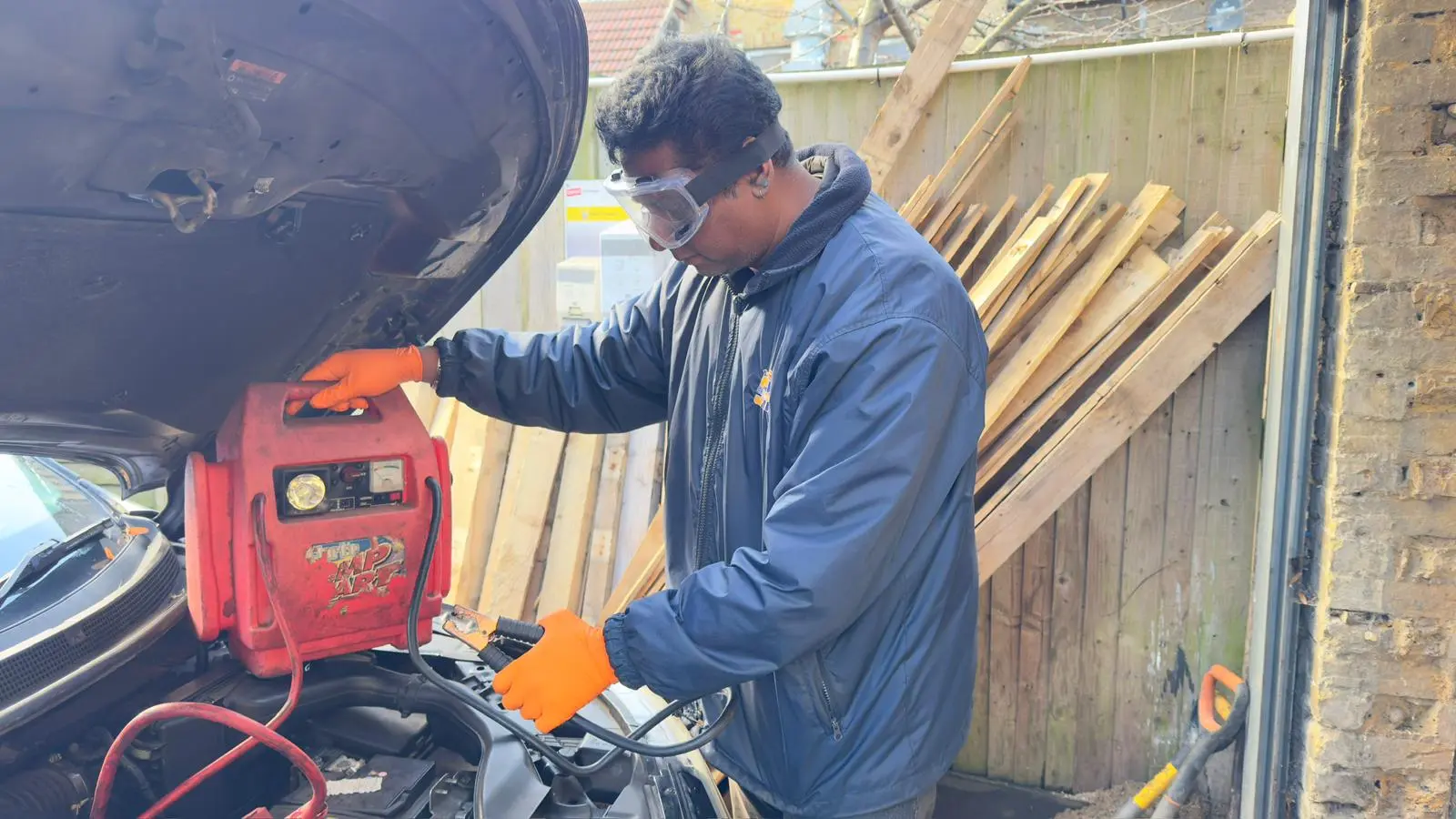
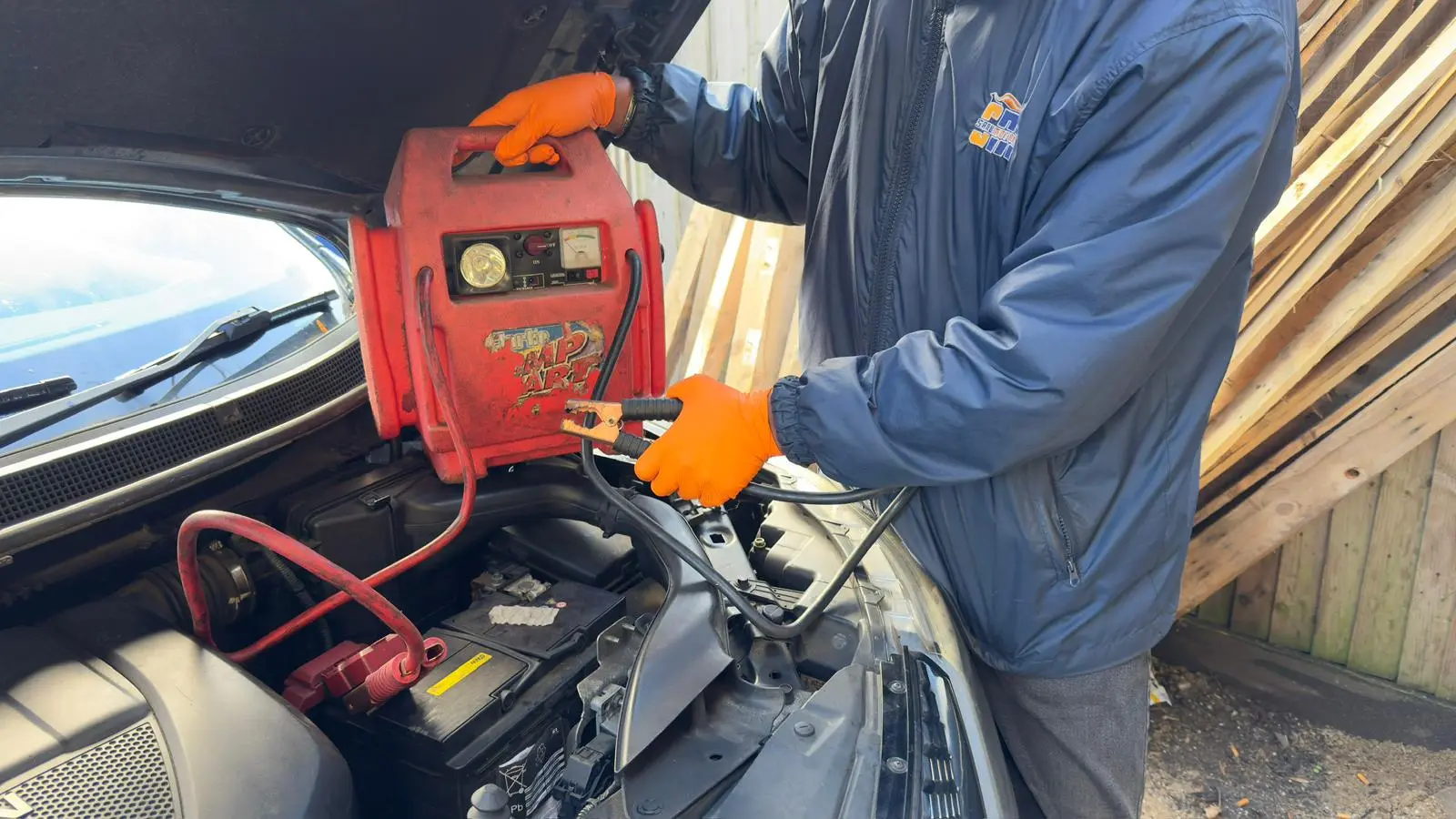
Portable Jump Starters: A Safer Alternative
Portable jump starters (battery boosters) are safer for modern cars than using another vehicle. They provide controlled power delivery, reduce risk of voltage spikes, don't require another car, and typically cost £40-£150 for quality units. A worthwhile investment for any driver.
Need Professional Jump Start Assistance?
Not confident jump starting yourself? Enter your registration and we'll WhatsApp you one price before you book.
How to Jump Start a Car: Step-by-Step Instructions
Follow these steps in exact order. The connection sequence is critical for safety and to prevent damage to vehicle electronics.
Step 1: Position Vehicles Safely
- Park the working vehicle close enough for jump leads to reach both batteries (usually nose-to-nose or side-by-side)
- Ensure both vehicles are in Park (automatic) or Neutral (manual) with handbrakes engaged
- Turn off both engines completely
- Turn off all electrical systems: lights, radio, heating, air conditioning
- Remove keys from ignition (or ensure keyless cars are fully off)
- Open both bonnets and prop them securely
Step 2: Identify Battery Terminals
- Locate both batteries - consult your manual if you can't find them (some are in the boot or under seats)
- Identify the POSITIVE (+) terminal - usually red cover or red plus (+) symbol
- Identify the NEGATIVE (-) terminal - usually black cover or black minus (-) symbol
- Remove any plastic covers from the terminals
- Inspect for damage: Cracks, leaks, corrosion, or swelling mean STOP - call a professional
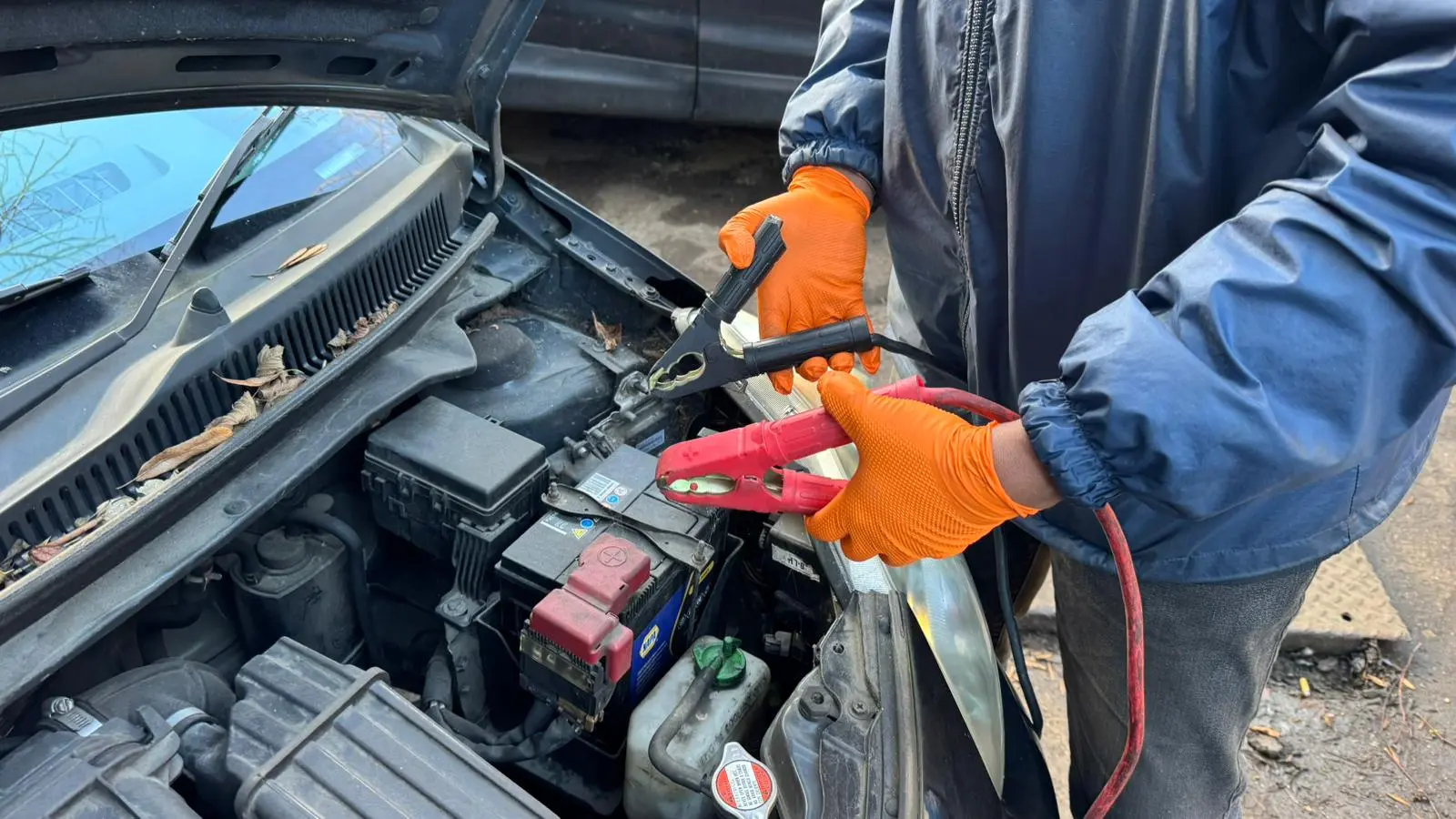
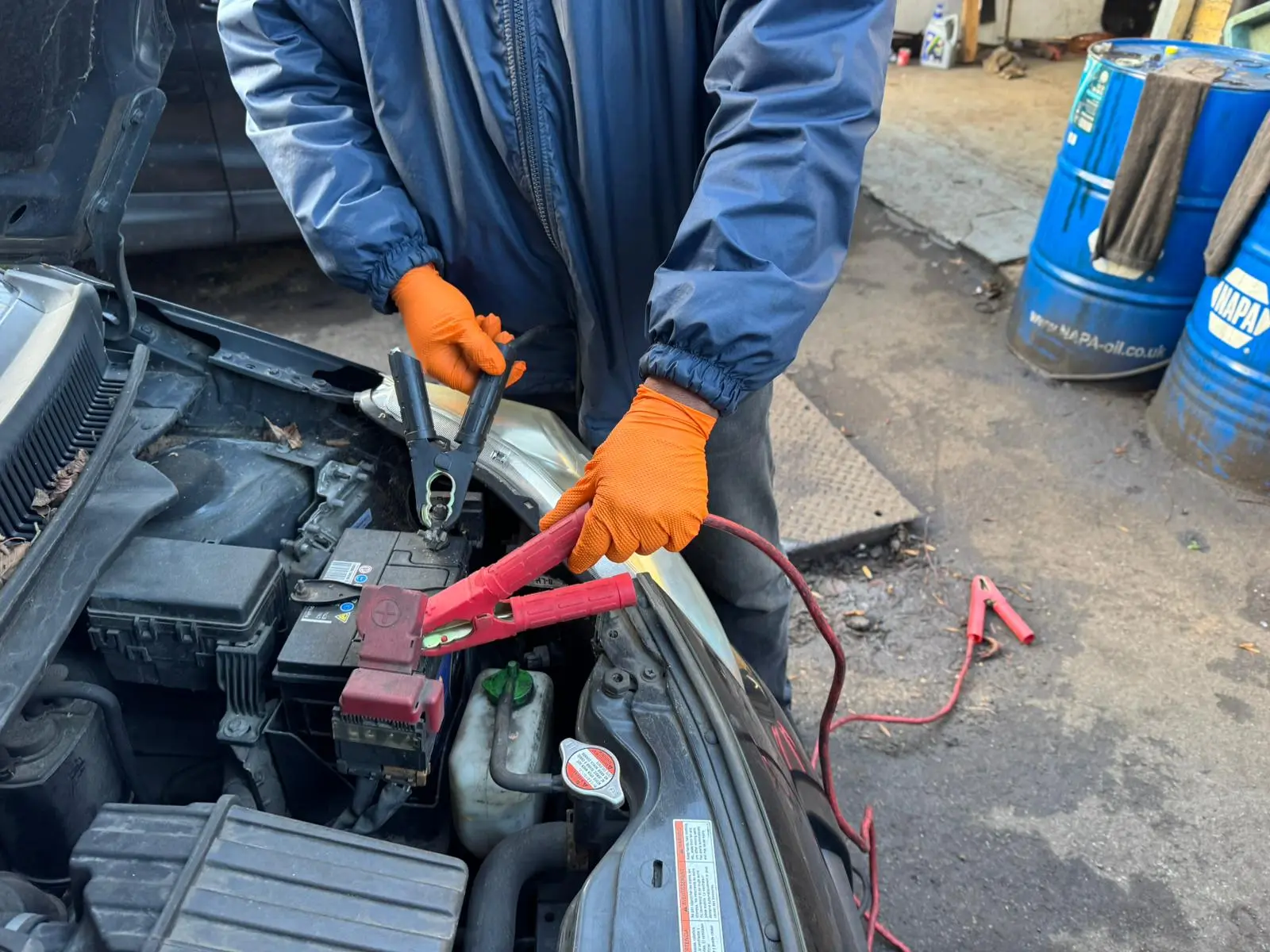
Step 3: Connect the RED Positive (+) Lead to the DEAD Battery
- Take the RED positive (+) jump lead
- Attach one RED clamp to the POSITIVE (+) terminal of the DEAD battery
- Ensure a firm, secure connection to clean metal (remove corrosion if needed)
- The clamp should not move or be loose
Step 4: Connect the RED Positive (+) Lead to the WORKING Battery
- Take the other end of the RED positive (+) jump lead
- Attach it to the POSITIVE (+) terminal of the WORKING battery
- Again, ensure a secure connection to the metal terminal
- Both red clamps should now be connected to positive terminals
Step 5: Connect the BLACK Negative (-) Lead to the WORKING Battery
- Take the BLACK negative (-) jump lead
- Attach one BLACK clamp to the NEGATIVE (-) terminal of the WORKING battery
- Secure the connection firmly
Step 6: Connect BLACK Negative (-) Lead to METAL GROUND (NOT Battery)
This is the MOST IMPORTANT step - read carefully:
- Take the other end of the BLACK negative (-) jump lead
- DO NOT connect to the dead battery's negative terminal
- Instead, attach it to an UNPAINTED METAL SURFACE on the dead car's engine block or chassis
- Choose a point as far from the battery as the cable will allow
- Good connection points: engine mounting brackets, alternator brackets, solid metal engine components
- Why this matters: Connecting away from the battery prevents sparks near battery gases which could cause an explosion
Critical Safety Warning
Never connect the final negative (-) lead to the dead battery's negative terminal. Batteries produce explosive hydrogen gas. A spark at the battery could cause an explosion resulting in serious injury. Always connect the final negative lead to a metal ground point on the engine block.
Step 7: Start the Working Vehicle
- Start the engine of the working vehicle
- Let it run at slightly elevated RPM - around 1,500-2,000 RPM (gentle acceleration)
- Allow it to run for 3-5 minutes to begin charging the dead battery
- Keep the engine running throughout the process
Step 8: Attempt to Start the Dead Vehicle
- After 3-5 minutes, try starting the dead vehicle
- Turn the key (or press start button) and attempt to start the engine
- If it starts: Great! Let it run and proceed to Step 9
- If it doesn't start: Wait another 3-5 minutes with the working vehicle running, then try again
- If it still won't start after 10 minutes total: Stop trying - the problem is not a simple flat battery. You need professional diagnosis
Step 9: Remove Jump Leads in REVERSE Order
This is critical - remove leads in EXACT REVERSE ORDER to connection:
-
Remove BLACK negative (-) from engine block
Disconnect the black negative lead from the metal ground point on the previously dead car's engine.
-
Remove BLACK negative (-) from working battery
Disconnect the black negative lead from the working battery's negative terminal.
-
Remove RED positive (+) from working battery
Disconnect the red positive lead from the working battery's positive terminal.
-
Remove RED positive (+) from previously dead battery
Finally, disconnect the red positive lead from the previously dead battery's positive terminal.
Important: Keep both engines running during lead removal. Be careful not to let the metal clamps touch each other or any metal surfaces while disconnecting.
Step 10: Keep Engine Running and Drive to Recharge
- Do not turn off the revived engine immediately
- Drive the vehicle for at least 20-30 minutes to allow the alternator to recharge the battery
- Driving is better than idling - the alternator generates more power while driving
- Use a route with minimal stop-starting (motorway driving is ideal)
- After 20-30 minutes, you can safely turn off the engine
Success!
If your car starts normally after the 20-30 minute drive, your battery has successfully recharged. However, if you need to jump start again within 24-48 hours, your battery likely needs replacement. A healthy battery should hold its charge after a single jump start.
Modern Car Complications: What You Need to Know
Today's vehicles have complex electronic systems that can be damaged by incorrect jump starting. Here's what you need to know:
Keyless Entry and Start-Stop Systems
- Can you leave the car "on" to maintain hazard lights? No - ensure the keyless car is fully off (not just in accessory mode) before jump starting
- Remove the key fob: Some vehicles lock or shut down if the fob is too far away - keep it nearby
- Start-stop systems: These cars are more sensitive to voltage fluctuations - extra caution required
Hybrid and Electric Vehicles
- DO NOT attempt to jump start hybrid/EV high-voltage battery systems - extremely dangerous
- Hybrids have a separate 12V battery (for lights, radio, etc.) which MAY be safe to jump start - but check your manual first
- Many manufacturers explicitly forbid jump starting hybrids/EVs due to electronics damage risk
- Best practice: Call professional recovery for any hybrid or electric vehicle
Electronic Parking Brakes and Push-Button Start
- Electronic parking brakes may not engage/disengage with a dead battery
- Push-button start vehicles might not recognize the start button after jump starting - you may need to press it multiple times or wait a moment
- Some vehicles require you to press the brake pedal before starting even after a jump start
When to Call for Professional Jump Start Services
While jump starting is often a DIY task, there are many situations where professional help is safer, faster, and more cost-effective:
Call a Professional If:
- You're alone without another vehicle or jump starter - you can't jump start without a power source
- You're in a dangerous location - busy road, motorway, unsafe area where working under the bonnet is risky
- The battery shows any damage - cracks, leaks, bulging, excessive corrosion
- You smell sulfur/rotten eggs - battery is venting dangerous gas
- Jump starting didn't work after two attempts - the problem is not a simple flat battery
- You're not confident in the procedure - incorrect jump starting can cause expensive damage
- You have a hybrid, electric, or high-performance vehicle - these require specialist knowledge
- It's late at night or bad weather - safety and comfort matter
- You have young children, elderly passengers, or disabilities - professional help is less stressful
Professional Jump Start Services: What to Expect
- Cost: £50-£80 for most standard callouts in urban areas
- Response Time: 15-45 minutes depending on location and provider
- Service Includes: Battery assessment, safe jump starting, battery health testing, advice on replacement if needed
- Equipment: Professional jump starters safe for all modern vehicles
- Expertise: Trained technicians who can diagnose if the issue is alternator, starter motor, or battery
Jump Start Help in Bromley & South East London
Sanu Recovery arranges battery jump starts across Bromley, Orpington, Beckenham, Sidcup, and West Wickham through independent local operators. We check an operator's insurance and credentials before they take work through us. Requests are handled 24/7. Call or WhatsApp 078 3333 93 09 and we'll send you one price before you book.
Preventing Flat Batteries: Maintenance Tips
Prevention is always better than needing a jump start. Follow these tips to keep your battery healthy:
Regular Maintenance
- Check Battery Age: Most car batteries last 3-5 years - if yours is over 3 years old, have it tested
- Keep Terminals Clean: Corrosion prevents proper charging - clean terminals with a wire brush and baking soda solution
- Ensure Secure Connections: Loose battery terminals cause poor charging and starting issues
- Test Annually: Have battery health tested at each service or annually
Driving Habits That Protect Batteries
- Avoid Very Short Journeys: Trips under 10 minutes don't give the alternator enough time to recharge the battery
- Drive Regularly: Leaving a car unused for weeks drains the battery - start and drive for 20+ minutes weekly if possible
- Turn Off Accessories Before Stopping: Radio, lights, air con - turn them off before switching off the engine
- Check for Lights Left On: Interior lights, boot lights, glove box lights - easily forgotten but drain batteries overnight
Winter Battery Care
- Cold Weather Drains Batteries: Battery capacity drops by 35% in freezing temperatures
- Pre-Winter Testing: Have your battery tested in September/October before winter arrives
- Keep Battery Warm: Garaged cars fare better than street-parked in winter
- Consider a Battery Conditioner: If your car sits unused for long periods, a trickle charger maintains charge
Frequently Asked Questions
Can I jump start a car on my own?
Yes, you can jump start a car on your own if you have another vehicle or a portable jump starter, the correct jump leads, and knowledge of the proper connection order. However, never attempt to jump start a hybrid or electric vehicle without professional help, or if you notice battery damage, leaking, or a sulfur smell. Modern cars with complex electronics can be damaged by incorrect jump starting. If you're not confident, call a professional service for safe assistance.
What order do jump leads connect?
The correct jump lead connection order is critical for safety: 1) Connect RED positive (+) lead to the DEAD battery's positive terminal, 2) Connect the other RED positive (+) lead to the WORKING battery's positive terminal, 3) Connect BLACK negative (-) lead to the WORKING battery's negative terminal, 4) Connect the other BLACK negative (-) lead to an UNPAINTED METAL surface on the dead car's engine block (NOT the battery). This order prevents sparks near the battery which could cause an explosion.
How long should I run the car after a jump start?
After successfully jump starting your car, you should run it for at least 20-30 minutes to allow the alternator to recharge the battery. Ideally, drive the vehicle rather than just idling, as driving generates more charge. If your battery won't hold a charge or you need to jump start again within 24-48 hours, the battery likely needs replacing. A healthy battery should hold its charge after a single jump start.
Can you jump start a completely dead battery?
It depends on why the battery is dead. If the battery is simply discharged (lights left on, old age), jump starting usually works. However, if the battery is completely dead due to internal damage, a cracked case, frozen cells, or sulfation from long-term neglect, jump starting may not work or may only provide temporary power. Batteries that have been dead for weeks or months often cannot be recovered and need replacement. If jump starting doesn't work after 5 minutes, call for professional recovery.
Is it safe to jump start modern cars with lots of electronics?
Jump starting modern cars requires extra caution due to sensitive electronics. Modern vehicles have computers, sensors, and electronic systems that can be damaged by voltage spikes during jump starting. To minimize risk: ensure both vehicles are turned OFF before connecting leads, follow the exact connection order (positive to positive, negative to metal ground - NOT battery), never reverse the polarity, and consider using a portable jump starter instead of another vehicle as they provide more controlled power delivery. If your car has keyless entry, start-stop technology, or you're unsure about the procedure, professional assistance is safer.
Why won't my car start even after a jump start?
If your car won't start after a jump start attempt, several issues could be the cause: 1) The battery is too damaged to accept a charge (cracked, frozen, or sulfated), 2) The alternator is faulty and not generating power, 3) The starter motor itself is broken, 4) There's a deeper electrical system problem, 5) The jump leads weren't connected properly or long enough, or 6) The problem isn't battery-related at all (fuel system, ignition, security system). If jump starting doesn't work after 5 minutes of charging, don't keep trying - call a professional recovery service for proper diagnosis and assistance.
Can I use a portable jump starter instead of another car?
Yes, portable jump starters (also called jump packs or battery boosters) are an excellent alternative to using another vehicle. Benefits include: no need for another car, safer for modern vehicle electronics, compact and portable, often include USB charging and LED lights, and easier connection process. Quality portable jump starters cost £40-£150 and are worthwhile investments for any driver. Ensure the jump starter is: fully charged, rated for your vehicle's engine size (petrol engines need less power than diesel), and has sufficient peak amps (300-600A for most cars, 700-1000A for larger diesels).
How quickly can I get professional jump start help in Bromley?
In Bromley and surrounding South East London areas (Orpington, Beckenham, Sidcup), arrival times depend on where you are, the time of day and how busy things are. With Sanu Recovery, we WhatsApp you one price before you book and arrange an independent local operator to come out to you. National breakdown services average 45-60 minutes. Professional jump start services cost £50-£80 for most callouts and include: safe battery assessment, proper jump starting technique, battery health testing, and advice on whether replacement is needed. Requests are handled 24/7 including weekends and holidays, though premium rates apply for evening and overnight callouts.
Conclusion: Knowledge, Preparation, and Knowing When to Get Help
Jump starting a car is a valuable skill for any UK driver, but it must be done correctly to avoid injury and expensive damage to modern vehicle electronics. The key takeaways from this guide:
Essential Points to Remember:
- Connection order matters: Always follow the exact sequence - positive to positive, negative to working battery, final negative to metal ground (NOT dead battery)
- Safety first: Never jump start damaged batteries, hybrids/EVs without professional advice, or in unsafe conditions
- Modern cars need extra care: Complex electronics are vulnerable to voltage spikes from incorrect jump starting
- Portable jump starters are safer: They provide more controlled power delivery than another vehicle
- Recharge properly: Drive for 20-30 minutes after jump starting to allow the battery to recharge
- Know when to call help: Professional services are fast, affordable, and eliminate risk
- Prevention is key: Regular battery testing, avoiding short journeys, and winter preparation prevent most flat battery situations
If you've had to jump start your car more than once in recent months, your battery is likely reaching the end of its life (3-5 years is typical). Have it tested professionally and replace it before you're stranded.
Most importantly, if you're ever uncertain, uncomfortable, or in an unsafe location - don't hesitate to call for professional jump start assistance. The small callout cost is far less than the potential expense of damaging your vehicle's electronics or risking injury.
Flat Battery? Get Professional Help
Covering Bromley & SE London. Enter your registration to get your price. You see the full amount before you book.